[Back to Red Ribbon Campaign front page]
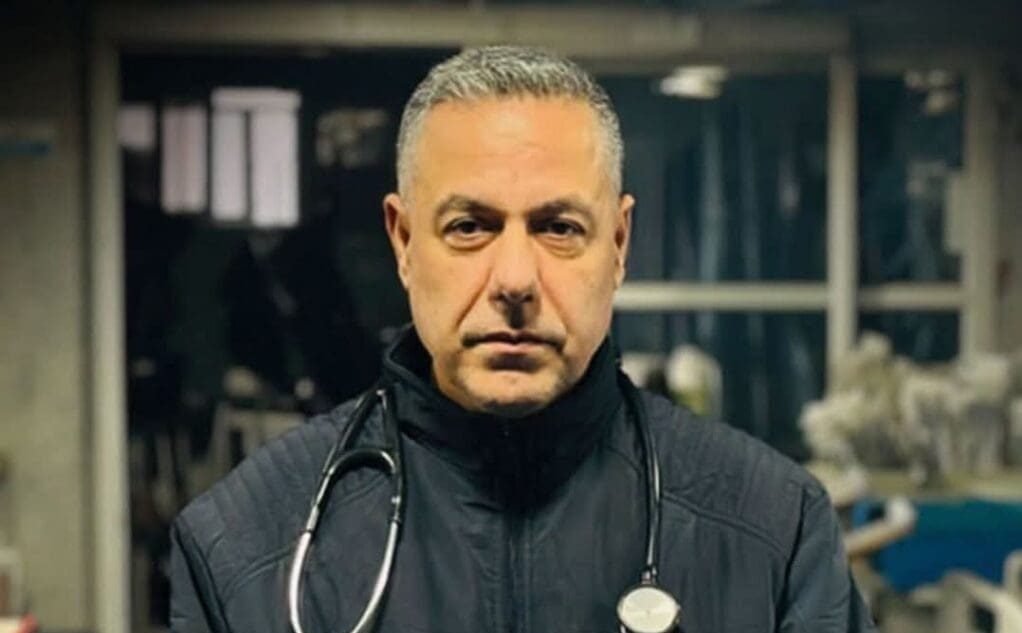
Dr. Mahmoud Abu Shehada
The story of Dr. Mahmoud Abu Shahada, Consultant in Orthopaedics at Nasser Medical Complex in Khan Younis, reveals Israel’s arbitrary brutality and cruelty. His treatment follows a pattern repeated over and over. Released in January 2025 and now returning to work, his testimony is vital. The joy of his release can be felt across the digital divide.
Dr. Shehada gave us this important message:
From the beginning of the war until now, we doctors have grown disinterested in conveying information to the world, because it is silent in the face of the massacres and destruction in Gaza. It is shameful that the world, and human rights organizations, see what is going on and do not move a finger to save Gaza and its people. But we still hope that there will be a response to our constant cry for help to those who have a heart to save what remains.
Dr. Abu Shehada was one of 70 medical staff arrested, along with dozens of patients, on February 17th, 2024, during Israel’s invasion of the hospital. All the medical staff were told to leave.
They were lined up, blindfolded, handcuffed and subjected to severe beatings. That night, they endured assaults and abuse; it was cold, they were stripped naked and they were sprayed with cold water.
Dr. Shehada spent around three months in different detention centres, where, he says, he suffered “daily humiliations and torture,” before being transferred to Israel’s Negev desert prison.
The detention centres were enclosed by barbed wire and chains, resembling cages. The holding cells had a mattress no thicker than a centimetre that captives sat on all day, still handcuffed and blindfolded. They were deprived of regular showers, soap and proper hygiene, which lead to skin diseases and infections. Months of interrogation rooms, humiliation and torture followed for the doctor and his fellow prisoners.
Ultimately, Dr. Shehada was released, but he fears for others, held captive under inhumane conditions, without access to justice, while the world authorities turn away.
Dr. Hussam Abu Safiya
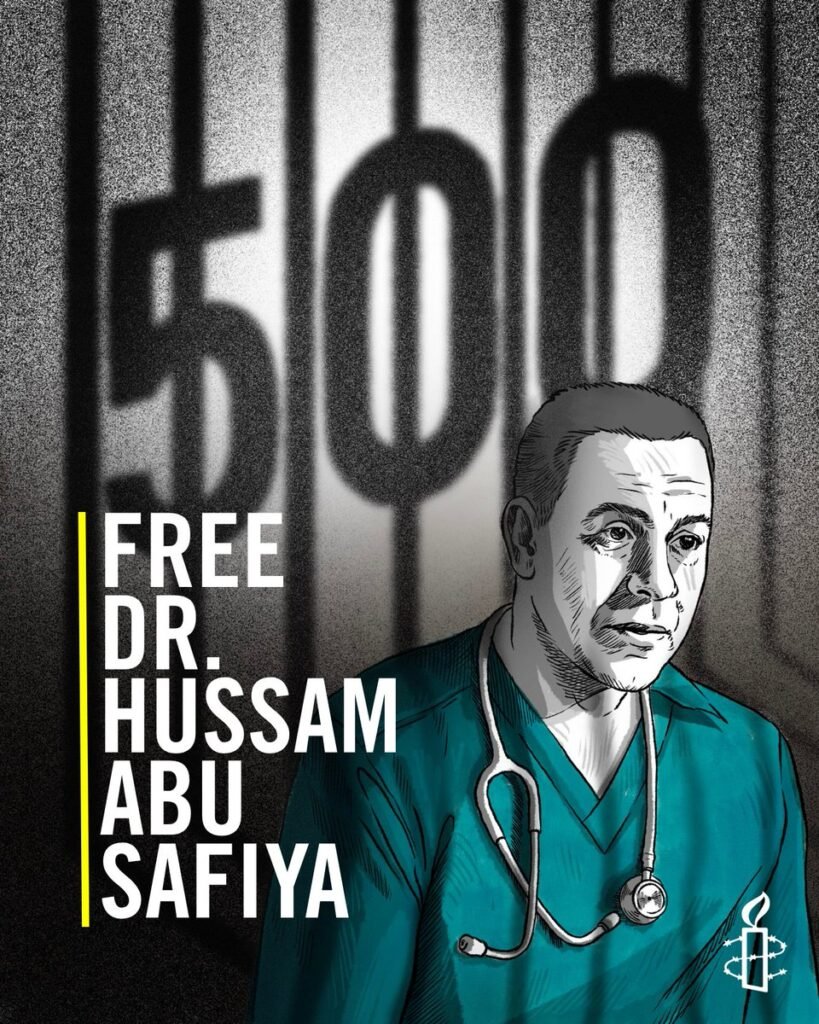
“My father is a doctor who will be held up worldwide as an example of adherence to medical ethics and courage.” So said Dr Abu Safiya’s son, Iyas.
Dr. Abu Safiya, the Director of Kamal Adwan hospital, is a paediatrician and neonatologist. His hospital in northern Gaza came under relentless attack but he remained with his patients and colleagues, making short video messages, calling on the world in general, and medics in particular, to act for Gaza.
Even when Dr. Safiya’s 15-year-old son was killed in a strike outside the hospital, he carried on. Similarly, he himself was injured, but after partial recovery he began to use a walking stick and refused to abandon his patients and colleagues.
In December 2024, such was the ferocity of the Israeli attack, that all staff and patients had to leave the hospital.
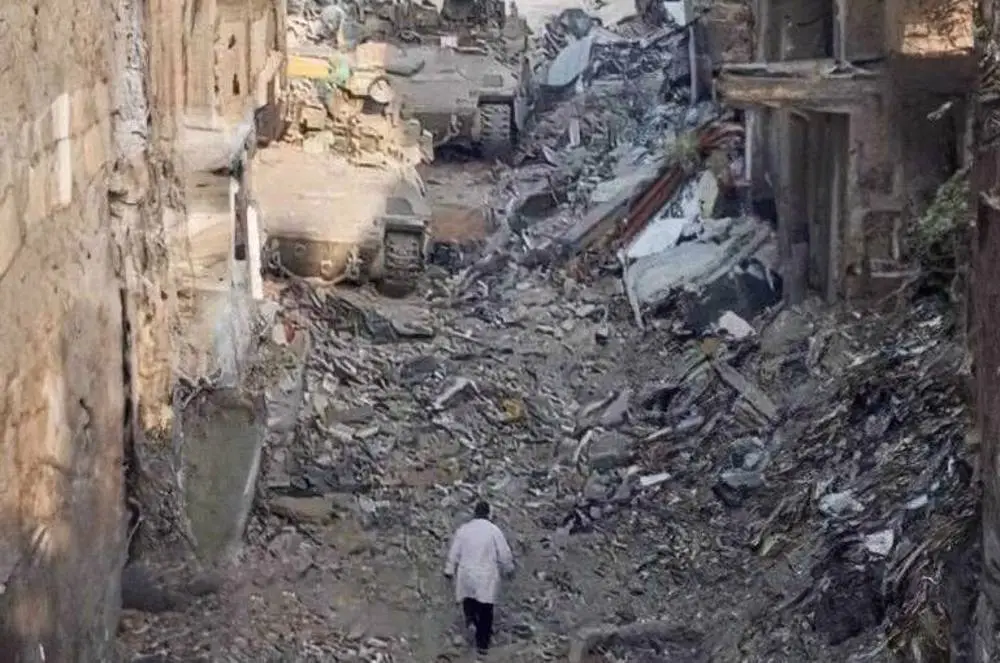
The now-iconic last photo of the doctor shows him walking alone, in his white coat, through rubble, towards the Israeli tanks. That was the last his friends and family saw of him as a free man.
The doctor has since been transferred from the notorious Sde Teiman holding facility to Ofer Prison, being mistreated continuously.
No charges have been brought against him and he is held under Israel’s “unlawful combatant” law, which allows detention without trial and which denies detainees access to the evidence against them.
It was months after his capture that Israeli authorities allowed Dr. Safiya to meet with legal counsel. That lawyer reported that the doctor and other detainees were subjected to assault and beatings. She also stated that Dr. Safiya showed signs of significant weight loss as the Israeli Prison Service continued to impose severe restrictions on Palestinian detainees’ access to food, adequate medical care and general hygiene. Several further legal visits reported further deterioration in the doctor, who has pre-existing health issues which require care and attention.
Many appeals for his release have been made, the latest being this Open Letter to the Royal College of Paediatrics and Child Health.
And Amnesty International has joined the campaign reporting that Dr Abu Safiya’s life is in imminent danger.